


Creating the Holy Trinity
Making Restaurants Unforgettable
By Garrett Rice, VP of Graphic Design
Fusion’s VP of Graphic Design, Garrett Rice, shares his thoughts on what makes a restaurant unforgettable. Every memorable restaurant balances three essential ingredients–food, service, and environment. When these elements come together with intention, they transform a meal into a moment, and a brand into a lasting memory.
In a market defined by rising expectations and operational pressure, experience has become the most powerful currency in hospitality.
What makes a restaurant truly unforgettable? It’s rarely just the food — though flavor always leads the way. The most sought-after restaurants capture something deeper: the way you feel the moment you walk in, the way the space seems to hum with intention, and the way the experience lingers long after the last bite. In short, they master the holy trinity of hospitality — food, service, and environment — and weave them into one seamless narrative.
But bringing those three elements into harmony is the real art. Today’s operators are facing tighter margins, shifting diner habits, and a renewed focus on efficiency. Plenty of places serve great food or design beautiful spaces, yet few manage to make people feel something that lasts. That resonant connection is harder to find — but when achieved, it’s what turns a single visit into a lifelong guest. Every interaction, every texture, every lighting cue becomes part of the memory. When those layers work together, you’re not just feeding people — you’re creating belonging.
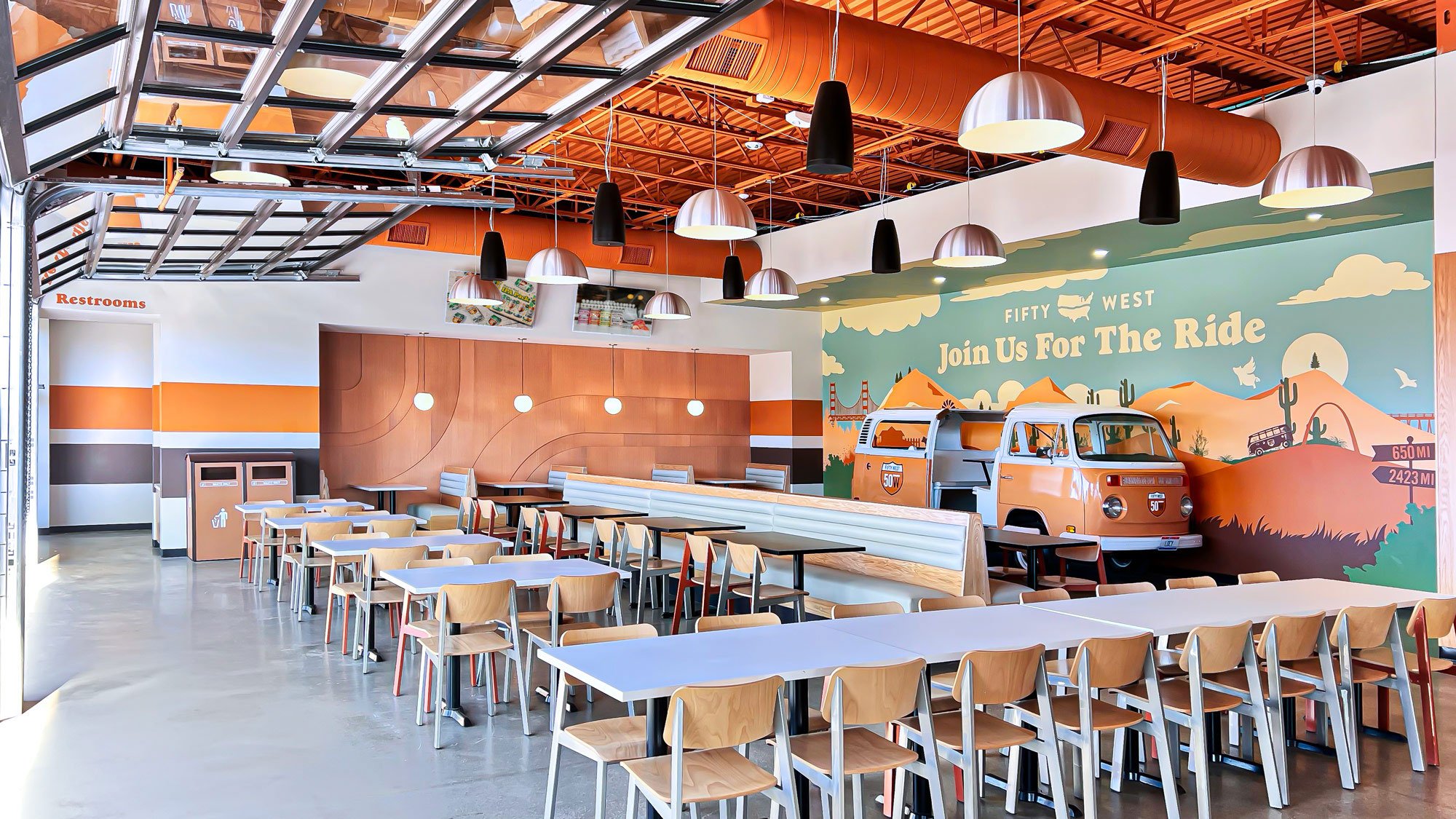
Fifty West Brewing; Deerfield, Ohio
The Shift from Menu to Memory
Dining is evolving faster than ever — and that evolution brings both pressure and possibility. Guests are seeking experiences that feel personal, authentic, and intentional, while operators are navigating rising costs, staffing challenges, and changing consumer behavior.
Across the board, from quick service and fast casual to casual dining and fine dining, the entire industry has shifted its mindset. Restaurants that once focused purely on convenience or consistency are now thinking like hospitality brands — investing in design, service culture, and sensory storytelling to create deeper emotional connection. Fine dining has long excelled at that level of orchestration, but today even the fastest concepts are embracing cues from the hospitality world: warmth, intentionality, and care that extend beyond the plate.
Recent research reinforces what many in the industry already know: 64% of diners say the experience matters more than price1. Immersive dining bookings are up 60% year over year2. And more than three-quarters of operators are investing in guest data integration and technology to create more connected experiences3.
The takeaway? Design and service aren’t “nice to haves” anymore — they’re business strategy. Food alone no longer carries the full weight of a restaurant’s identity. Service has become anticipatory rather than reactive, blending human warmth with operational systems. Design, too, has evolved — moving away from sterile minimalism toward spaces rich with character, story, and intentional flow.
When each of these elements — the plate, the people, and the place — align, the result is more than atmosphere. It’s measurable: improved efficiency, stronger loyalty, and a brand that performs as beautifully as it feels.
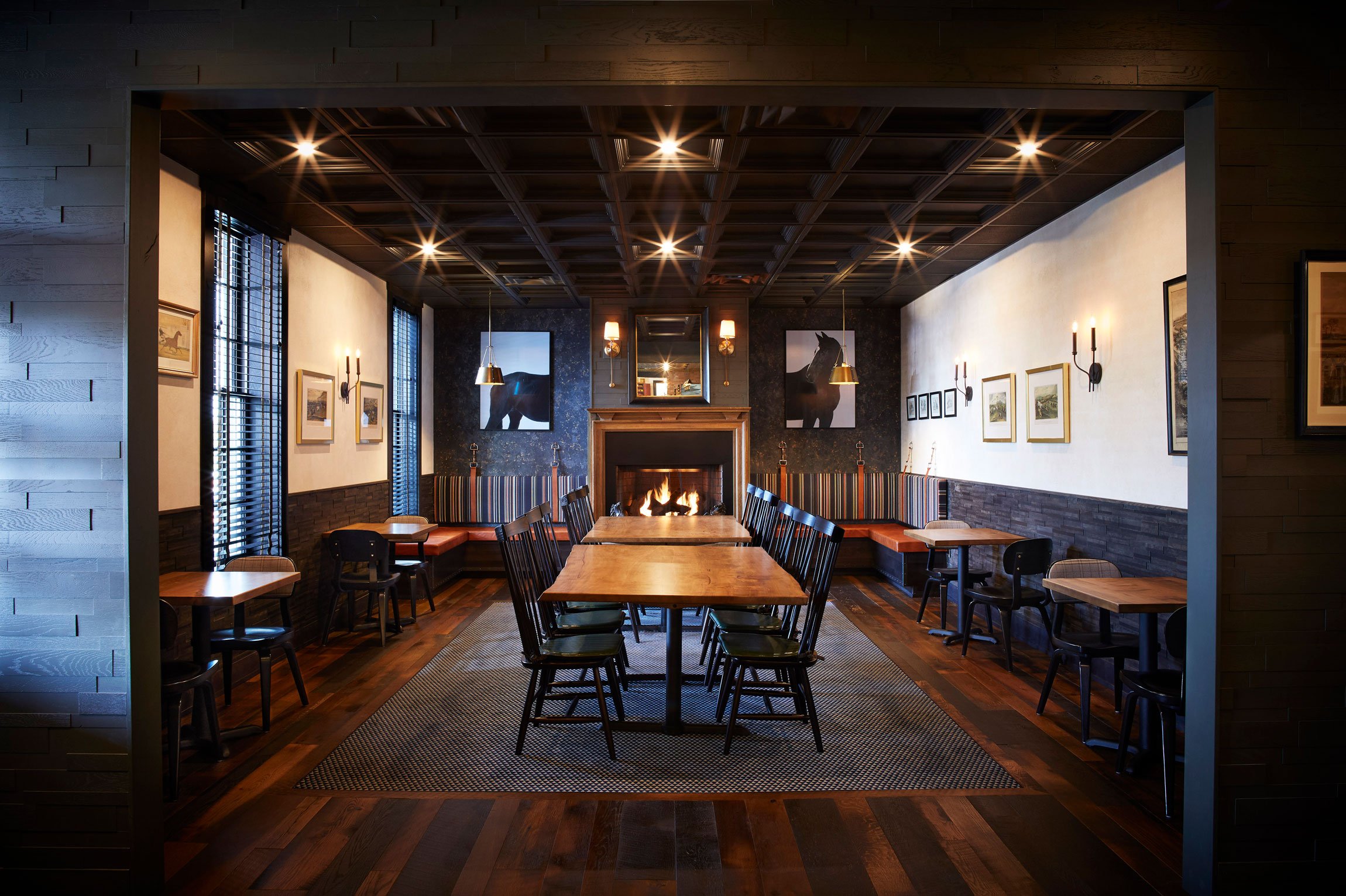
The Golden Lamb; Lebanon, Ohio
The Ingredients of Experience
Every memorable restaurant starts with the same foundation — food that tells a story, service that feels sincere, and an environment that amplifies emotion. Great food captures attention, but great service builds trust. Great design completes the memory.
This balance isn’t about extravagance — it’s about intentionality. Ingredient storytelling transforms sourcing and sustainability into narrative touchpoints that connect guests to place and purpose. Service evolves from transaction to connection, using both training and technology to anticipate rather than react. And design acts as both backdrop and character, shaping how guests move, feel, and remember4.
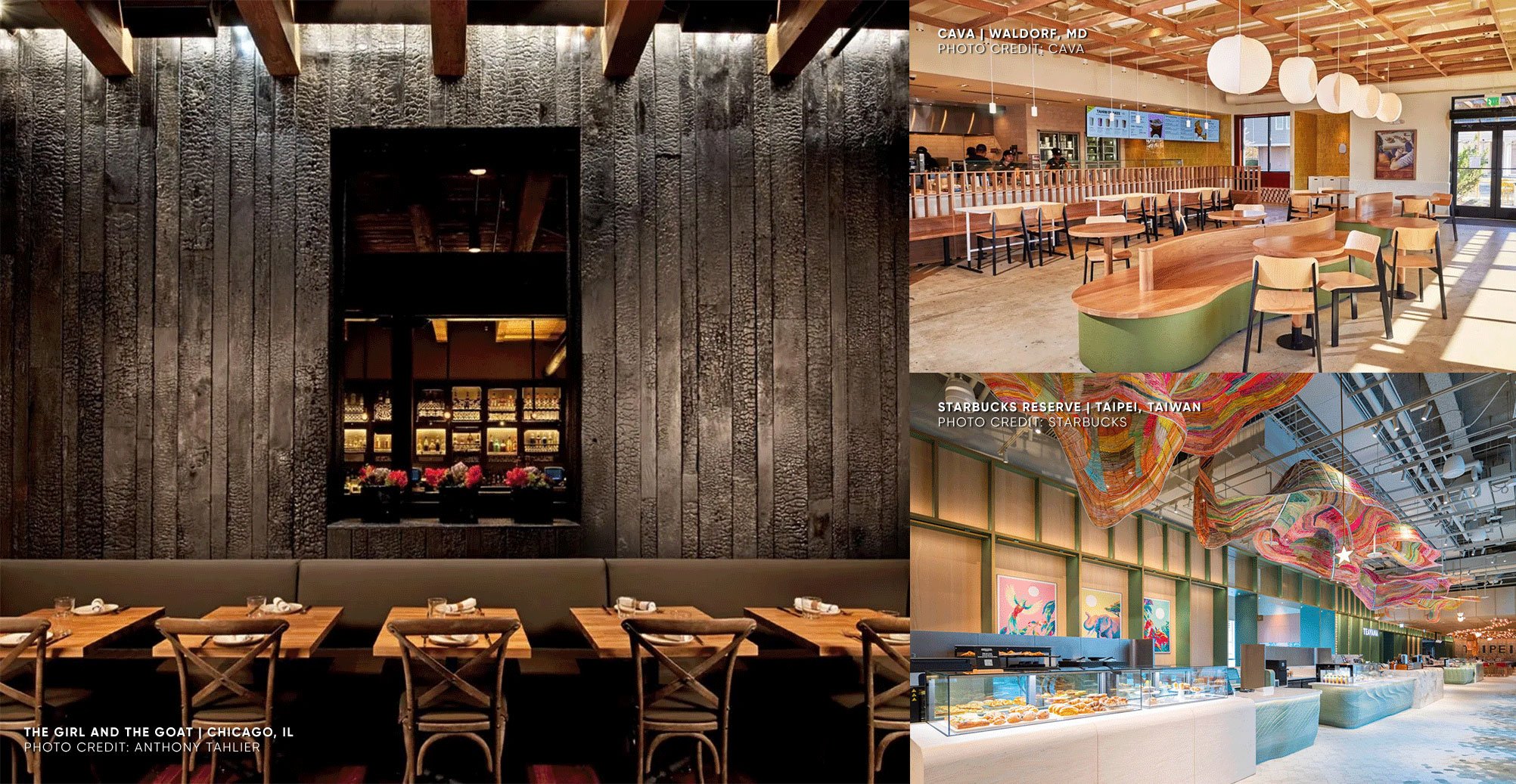
You can see this balance in action across a spectrum of brands that have elevated experience into craft. Girl & the Goat in Chicago brings warmth and intention to every plate and every detail of the dining room — a space that feels both familiar and daring at once. CAVA, an elevated fast-casual concept built on Mediterranean flavor and community energy, proves that efficiency doesn’t have to come at the expense of personality or presence. Starbucks Reserve bridges consistency with culture, blending global familiarity with local expression.
Each has found its own flavor of experience. None succeeded on food alone.
Designing for Connection
At its core, hospitality is choreography — a carefully orchestrated experience that feels effortless to the guest but is grounded in preparation and precision. The most successful brands today don’t just inspire; they operate smarter. They understand that every sensory cue, from lighting to layout, impacts dwell time, workflow, and brand perception.
When teams design with intention — when food, service, and environment are treated as interdependent ingredients — the results compound. Guests linger longer. Word-of-mouth grows organically. Staff engagement and efficiency improve. And the brand extends far beyond the dining room.
Because when everything is in its place — the flavors, the people, the space — the experience transcends the moment. It becomes a story that lives in memory and a system that sustains itself.
That’s the quiet magic of hospitality done right. It’s not just about feeding hunger, but fulfilling a deeper human need — to connect, to be seen, and to belong. The holy trinity works because it transforms restaurants from places we visit into places we feel — long after the lights dim and the last plate is cleared.
References
- National Restaurant Association. 2025 State of the Restaurant Industry Report.
- OpenTable. Dining Trends 2025.
- Popmenu. 2025 Restaurant Trends Report.
-
YouGov / BarMetrix. Restaurant Industry Trends 2025.