

A Smarter Capital Strategy for Senior Living
By: Eric Reiners, President
KEY INSIGHTS
-
Capital efficiency in senior living is most effective when addressed early in programming and design—not deferred to late-stage adjustments.
-
Integrated collaboration between architecture, engineering, interiors, and operations improves cost visibility and long-term performance.
-
Amenity planning benefits from evaluation beyond square footage—focusing on utilization, flexibility, and operational impact.
-
Early engineering coordination reduces redesign risk and supports more predictable construction outcomes.
-
Aligning experience design with operational strategy strengthens both resident satisfaction and long-term asset value.
Reducing Capital Expenditures in Senior Living Starts Early and Creates Value
Senior housing developers and operators are navigating one of the most challenging environments the sector has faced in decades. Expectations for hospitality-level environments continue to rise. Regulatory requirements remain complex and unforgiving. Capital markets, meanwhile, are demanding tighter discipline around the first costs and long-term performance.
Across markets nationwide, I still see many teams relying on late-stage value engineering as the primary tool for controlling capital expenditures. While understandable, this approach rarely delivers meaningful savings. More often, it diminishes resident experience, complicates operations, and introduces long-term costs that far outweigh any short-term reductions.
The projects that perform the best—financially and operationally—approach cost control very differently. They treat it as a design and planning strategy from day one, not a correction at the end.
Why Traditional Delivery Models Drive Higher Costs
Senior living is inherently complex. It must function simultaneously as housing, hospitality, and regulated care infrastructure. Yet some many projects are still delivered through fragmented, sequential models that treat architecture, interiors, engineering, and operations as separate exercises.
Typically, the building form and amenity vision are established first. Interiors refine the resident experience later. Engineering teams are then asked to make systems work within decisions that are already largely fixed. Operator requirements and brand considerations often arrive last, layered in as enhancements.
By the time true costs are fully understood, flexibility has disappeared. Value engineering becomes the only lever left—and it tends to target the most visible elements rather than the most impactful ones. The result may reduce construction costs on paper, but it frequently produces buildings that are harder to operate, less adaptable over time, and more expensive to renovate as needs evolve.
Early Integration Changes the Economics
The most effective senior living projects I've been involved with—across regions, scales, and care models—share a common trait: integrated disciplines of architecture, engineering, interior environments, and resident experience are implemented early, often immediately following project programming.
When the disciplines work together from the outset, cost decisions move upstream. Developers and operators gain real-time visibility into how design choices affect not just construction budgets, but systems efficiency, staffing models, and long-term flexibility.
Instead of asking, "What do we cut later?" teams are able to ask, "What do we design smarter now?" That shift alone changes the financial trajectory of a project.
Right-Sizing Amenities Without Sacrificing Differentiation
Amenity spaces remain one of the largest drivers of capital escalation in senior living. Competitive pressures can push communities toward oversized or redundant amenities that look compelling in marketing but underperform day to day.
When amenity planning is evaluated alongside engineering, interiors, and operations, these spaces can be calibrated more precisely. How often will an amenity be used? How will it be staffed? What does mechanical and electrical infrastructure does it require? Can it serve multiple functions across different times of day and levels of acuity?
Time and again, this integrated analysis reveals opportunities to reduce square footage, consolidate uses, or design flexible spaces that support programming without carrying unnecessary capital or operational burden. The community still feels robust and competitive—but with far greater efficiency built in.
Engineering Earlier Avoids the Most Expensive Redesigns
Some of the most disruptive cost overruns in senior living stem from late-stage engineering conflicts: ceiling heights compromised by mechanical systems, structural grids misaligned with unit layouts, fire separations that undermine openness, or undersized shafts that force redesign.
Embedding engineering expertise early—working in concert with architecture rather than reacting to it—dramatically reduces these risks. Systems can be right-sized, coordinated, and optimized before drawings are locked in. This minimizes redesign cycles, reduces change orders, and lowers the need for inflated contingencies driven by uncertainty.
Across projects in multiple jurisdictions, this early communication consistency proves to be one of the most reliable ways to protect capital budgets.
Material Decisions That Protect First Cost and Longevity
Interior environments in senior living must balance warmth, durability, infection control, and maintenance realities. When finish decisions are deferred or separated from broader design and operational discussions, they often result in last-minute substitutions that compromise either aesthetics or performance.
An integrated approach aligns material selection early with how spaces will actually be used and maintained over time. Premium materials are focused where they deliver the most experiential value, while durable, cost-effective alternatives are deployed strategically in lower-visibility areas.
The result is an environment that feels intentional and cohesive—without unnecessary first-cost premiums or premature replacement cycles.
Experience Design as a Capital Efficiency Tool
Branding, wayfinding, and experiential design are often misunderstood as optional upgrades. In reality, when integrated early, they can actively reduce capital expenditure.
Clear wayfinding strategies can simplify circulation and reduce spatial complexity. Experiential storytelling can activate spaces without relying on expensive architectural gestures. Graphics, artwork, lighting, and accessories can deliver identity and warmth while reducing the need for custom millwork or decorative construction.
When experience design is treated as infrastructure rather than decoration, it becomes a tool for achieving more with less.
Aligning Operations to Prevent Future Capital Leakage
Capital decisions that ignore operations rarely remain isolated to construction budgets. Inefficient layouts, excessive staff travel distances, poorly planned support spaces, and inflexible back-of-house areas often lead to future capital investments to fix avoidable problems.
Integrated teams evaluate operational flow early, ensuring that staffing models, services adjacencies, and support functions align with how the community will actually operate. Buildings designed with operational clarity are more adaptable to changing acuity levels and far less likely to require costly renovations later in their lifecycle.
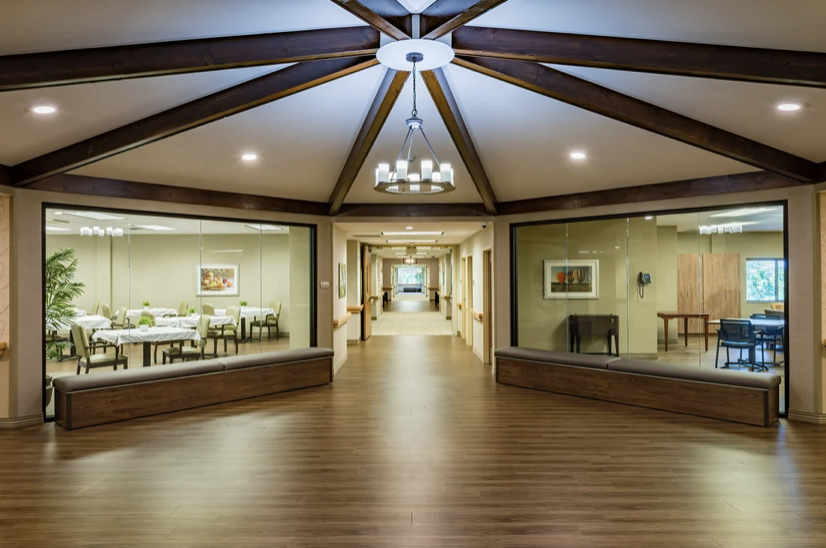
A Smarter Model for Senior Living Investment
The senior living projects that control capital expenditures most effectively are not the ones that cut the most at the end. They are the ones that make the smartest decisions at the beginning.
Early integrated design reduces waste, limits redesign, right-size amenities, optimized systems, and aligns experience with operations—before costs are locked in. Across markets nationwide, this approach has proven to be one of the most reliable ways to protect both first cost and long-term asset value.
In a capital environment that is increasingly cautious—but where differentiation still matters—design integration is no longer simply a preference. It is a financial strategy.
Beyond Amenities: Optimizing Senior Living Environments Through Integrated Design
Senior living environments today sit at the intersection of housing, hospitality, and healthcare—each with its's own operational demands, regulatory frameworks, and user expectations. As competition intensifies, common areas in particular have become the focal point of what is often referred to as "amenity wars," where features are added rapidly to attract residents but not always designed to perform cohesively over time.
FUSION approaches senior living differently. Through an integrated understating of architecture, interiors, engineering, and operations—backed by decades of experience—we design environments that move beyond surface-level amenities to deliver spaces that function efficiently, age gracefully, and genuinely enhance quality of life.
The Complexity of Senior Living Today
Senior living communities are among the most complex building types in the built environment. They must simultaneously operate as residences, hospitality venues, and regulated care facilities. Each layer introduces unique pressured: resident comfort and dignity, brand differentiation and market appeal, staff efficiency, life-safety requirements, and long-term operational sustainability.
Common areas sit at the center of this complexity. Dining venues, wellness spaces, social lounges, libraries, activity rooms, and outdoor gathering areas are expected to serve multiple user groups throughout the day—residents, staff, families and visitors—often with competing needs. When these spaces are driven solely by market trends or amenity checklists, they risk becoming underutilized, inefficient, or costly to maintain.
FUSION recognizes that successful senior living environments are not defined by the number of amenities offered, but by how thoughtfully those spaces are planned, connected, and operated.
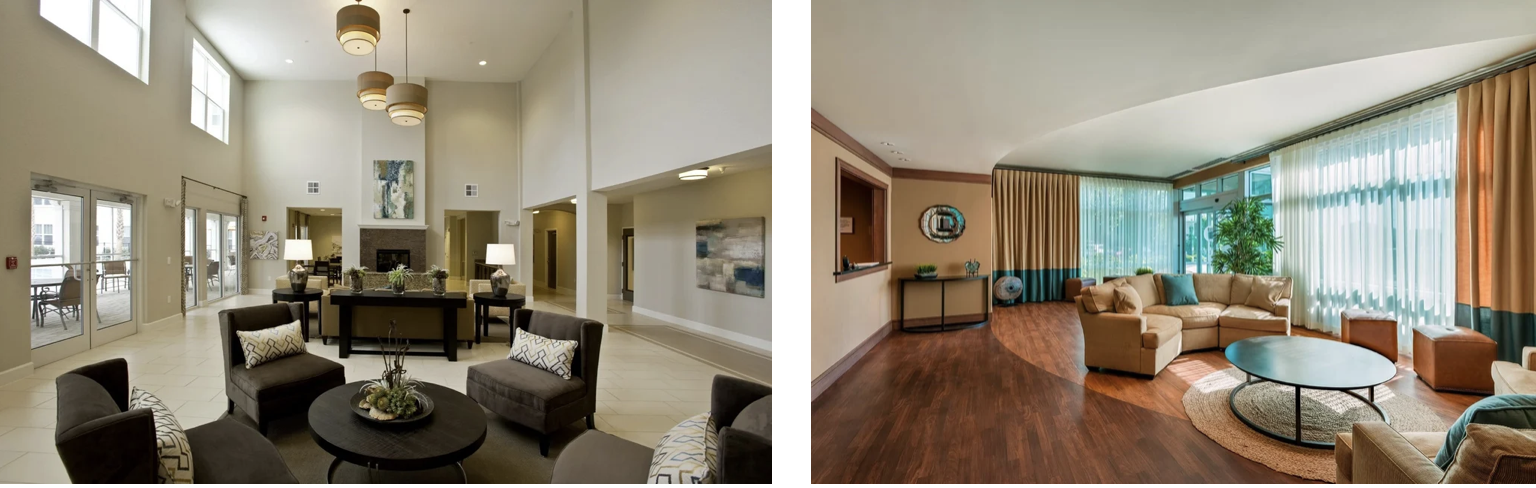
Reframing the "Amenity Wars"
The push to outdo competitors with increasingly elaborate amenities has reshaped senior living design over the past decade. While these features can play an important role in marketing and resident attraction, they often fail when they are not grounded in operational reality or resident behavior.
FUSION reframes the conversation. We begin by understanding how residents actually live, move, socialize, and age within a community. We evaluate how staff support those experiences, how services are delivered, and how spaces transition throughout the day. From there, amenities are designed not as standalone attractions, but as flexible, high-performing environments that serve multiple purposes and adapt over time.
A dining space, for example, is not just a restaurant—it is a social anchor, a wellness tool, and a logistical operation. A lounge is not simply a place to gather, but an extension of residents' living rooms, a quiet refuge, or an informal meeting space depending on time and need. By designing common areas with this level of nuance, FUSION ensures that amenity spaces remain relevant, used, and valued long after opening day.
Integrated Design as a Strategic Advantage
What distinguishes FUSION in senior living design is our fully integrated approach. Architecture, interior design, engineering, and operational planning are aligned from the earliest stages of a project. This integration allows us to anticipate challenges that often surface too late in traditional design processes—circulation conflicts, acoustical issues, staff inefficiencies, infrastructure limitations, and regulatory constraints.
From an architectural perspective, we focus on clarity of organization, intuitive wayfinding, and seamless transitions between public, semi-public, and private spaces. Interiors are designed to balance warmth and hospitality with durability, safety, and ease of maintenance, while supporting cognitive health, accessibility, and comfort. Engineering systems are thoughtfully coordinated to support flexibility, indoor air quality, acoustics, and long-term performance without compromising design intent.
Equally important is our understanding of operations. We design common areas that support staffing models, reduce travel distances, improve visibility, and accommodate changing levels of care—all while maintaining a residential, non-institutional feel.
Designing for Longevity, Not Just First Impressions
Senior living communities are long-term investments, and FUSION designs with that horizon in mind. Our experience across independent living, assisted living, and memory care environments has shown that the most successful communities are those that can evolve without requiring constant renovation.
We prioritize adaptable layouts, multi-use spaces, and infrastructure that allows for future change. Materials are selected not only for aesthetics, but for durability, maintenance cycles, and lifestyle cost. Common areas are planned to support a range of programming and resident abilities, ensuring they remain inclusive and functional as demographics shift.
This approach protects both the resident experience and the owner's investment—reducing operational friction while preserving brand integrity.
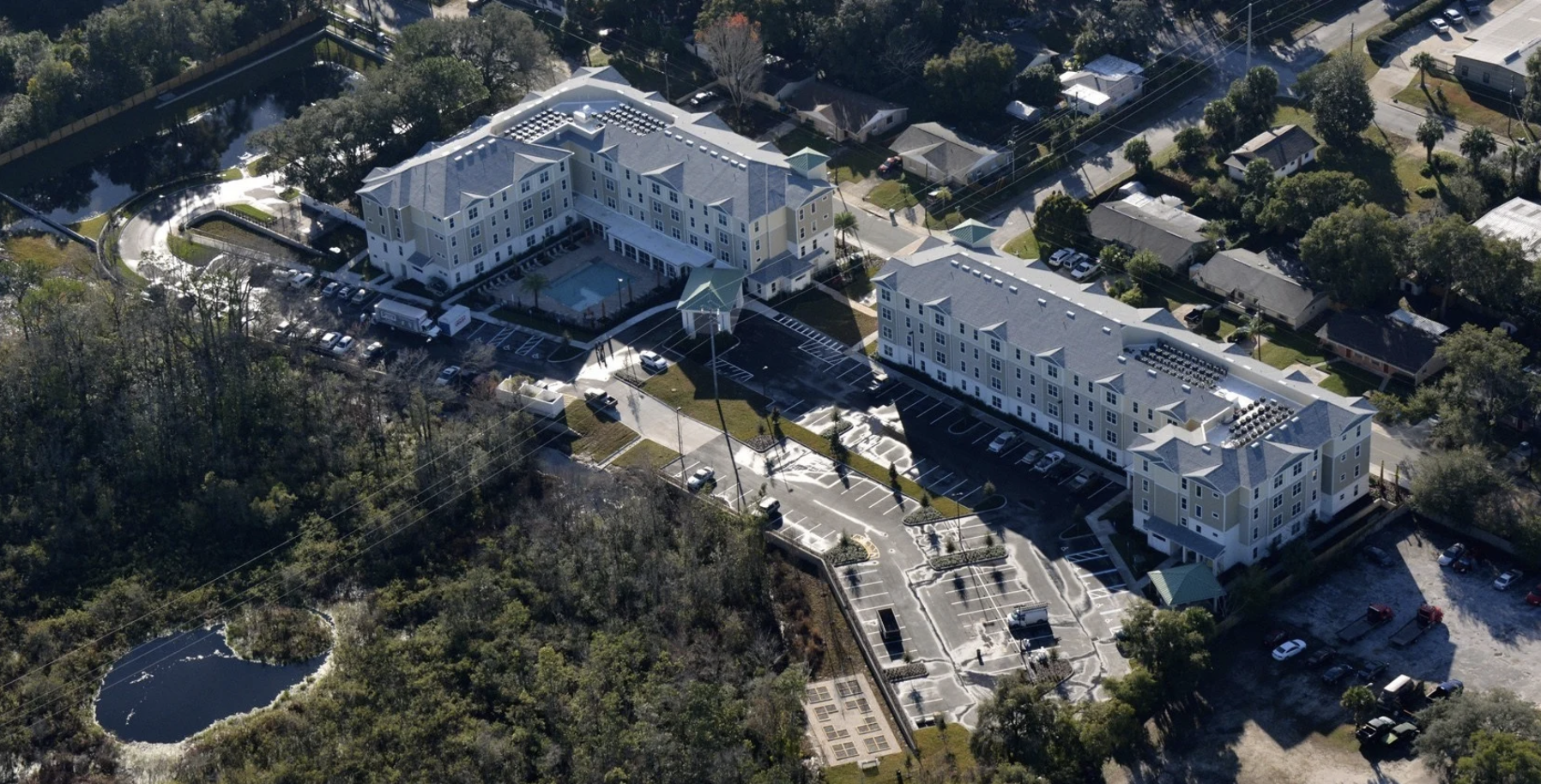
Experience That Informs Better Decisions
FUSION's approach is grounded in decades of experience designing for senior living environments across diverse markets. Our teams navigated complex regulatory landscapes, evolving care models, and shifting resident expectations. That experience allows us to identify risks early, make informed trade-offs, and guide clients through decisions with clarity and confidence.
We understand when innovation adds value and when restraint leads to better outcomes. We know how to balance hospitality-driven design with the realities of care delivery. And we recognize that the success of common areas is measured not by how they photograph, but by how they are used every day.
Conclusion
Senior living design demands more than amenities—it requires insight, integration, and foresight. At FUSION, we optimize senior living environments by aligning architecture, interiors, engineering, and operations into a cohesive strategy that supports, staff, and owners alike.
By moving beyond the amenity arms race and focusing on performance, adaptability, and lived experience, FUSION delivers senior living communities that are welcoming, resilient, and built to serve for years to come.